Start with a character rule set
Write down the details a reader will use to recognize the character before full-page production begins. For a child character, that may include the head-to-body ratio, hair shape, eye spacing, nose and mouth placement, clothing, and height beside adults. For an animal or creature, it may include ear shape, wing markings, tail length, muzzle color, and one recurring accessory.
Separate identity rules from scene variables. Identity rules should remain stable. Scene variables—pose, expression, lighting, scale, and viewpoint—should change when the story needs them to.
Build a character sheet that answers production questions
A useful sheet is a working reference, not just a portrait. It should show:
- front, three-quarter, side, and back views;
- stable proportions and the placement of facial features;
- exact colors, markings, clothing, and recurring props;
- size relationships between recurring characters;
- a small range of story-relevant expressions and poses; and
- details that are easy to lose, such as handedness, freckles, stripes, buttons, or a bag worn on one side.
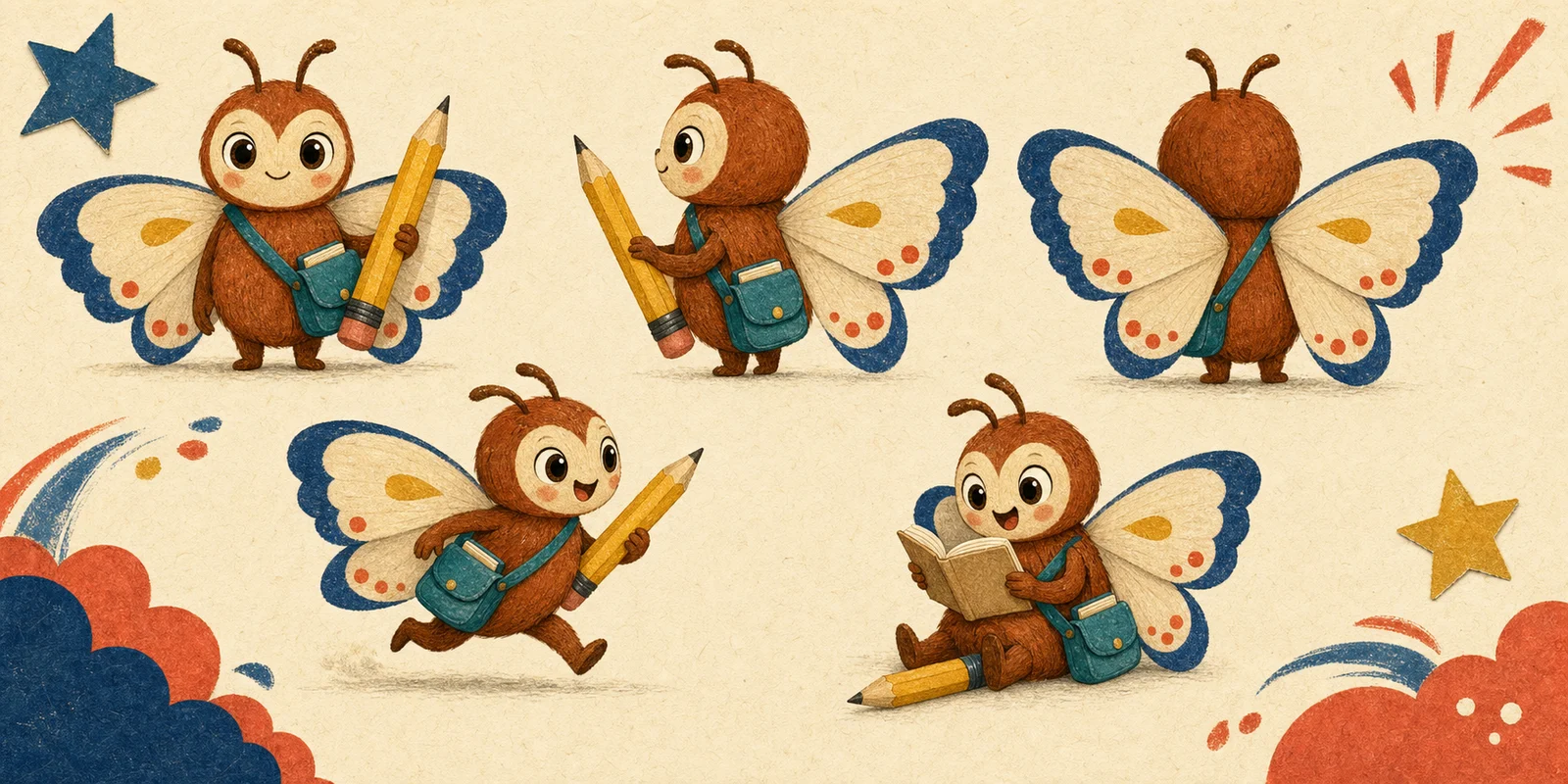
Pip is a fictional, artist-directed AI concept study made to demonstrate character continuity. Pip is not a client project.
Test the hard scenes before the whole book
Do not approve a character from one flattering front view. Test the places where continuity usually breaks: a rear view, a crowded scene, a close emotional moment, a distant action pose, a new outfit, and an interaction with a recurring prop. Also place the character in both a quiet and an energetic spread. If the design only works in one pose, it is not ready for a complete book.
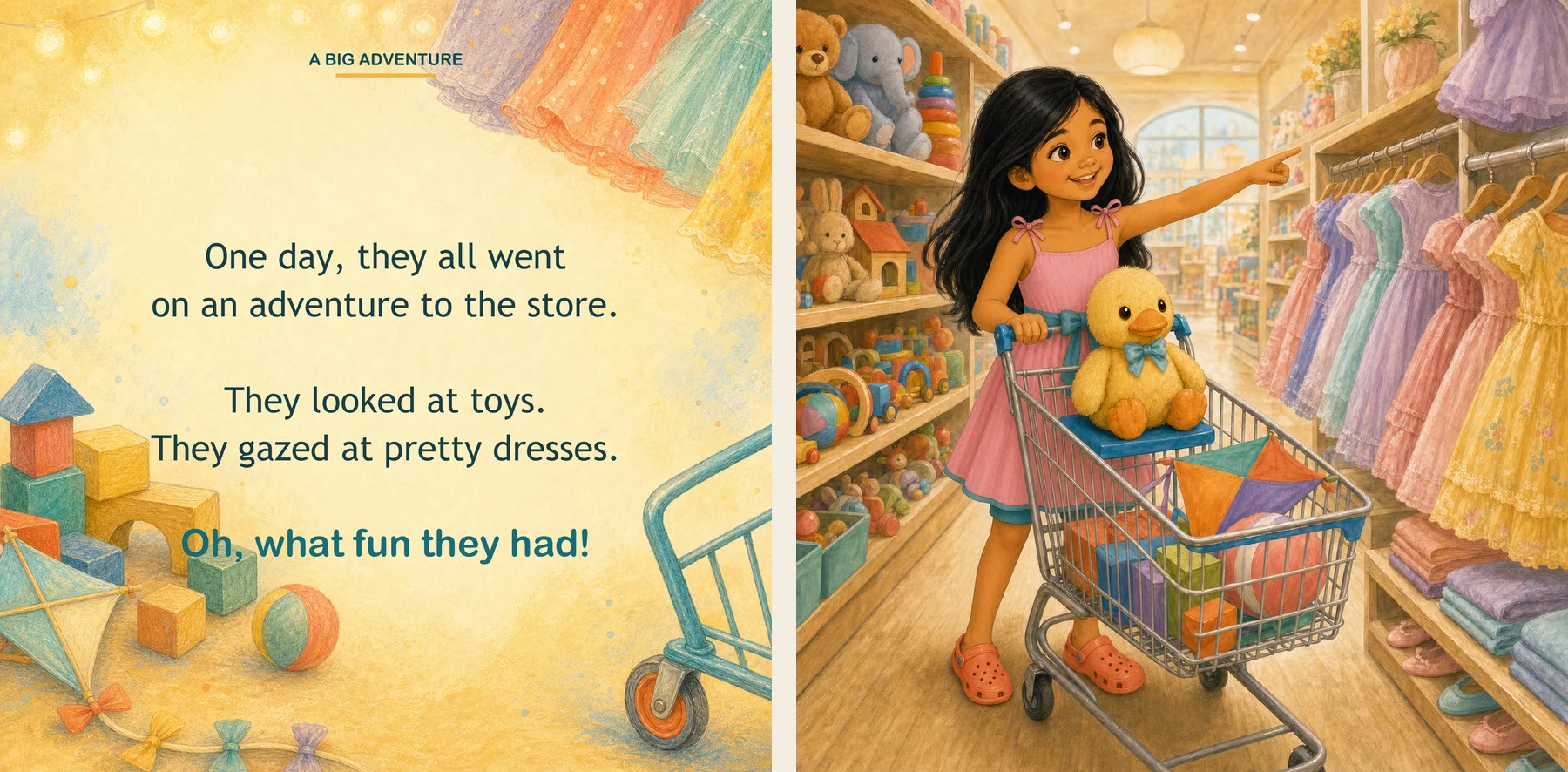
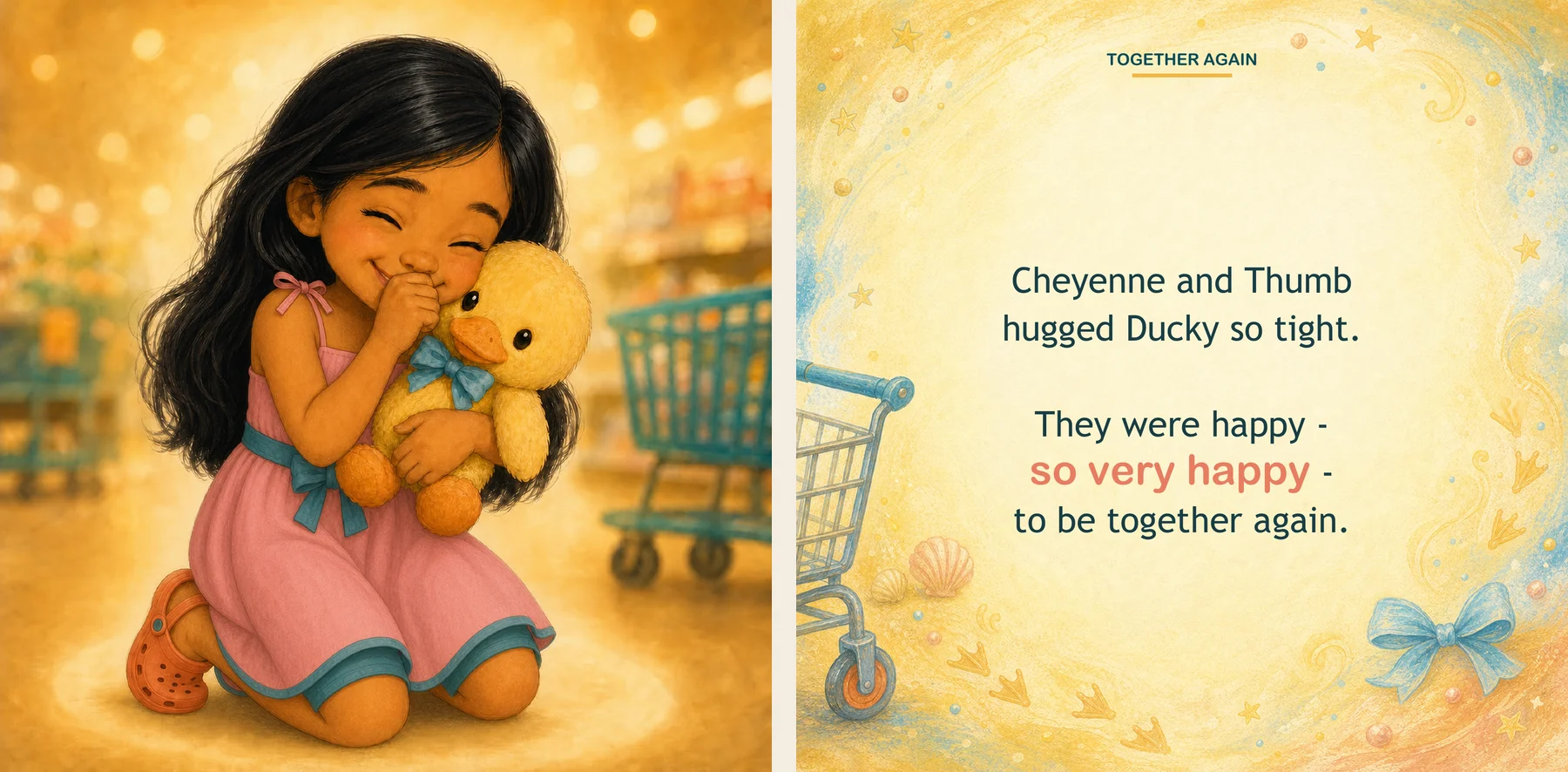
Ducky and the Thumb, by Jerrian Hawkins, is a completed 26-page book-production project. These spreads show the same cast carrying through changing settings and emotions. See the full project case study or review more finished work and style studies.
Track continuity across the 32-page plan
Mark every appearance of each recurring character on the storyboard. Beside each scene, note the view, expression, scale, wardrobe, prop state, and any intentional change. That catches errors that are difficult to notice when pages are reviewed one at a time—such as an object changing hands, a missing pocket, or a growth change appearing too early.
The page plan also shows where a deliberate change belongs. Mud, a torn sleeve, a lost tooth, or a new object should appear after the story event that causes it and remain until the manuscript resolves it. Use the free 32-page storyboard to map those appearances before final art.
Use checkpoints, not one late continuity review
- 1 · Lock identityApprove proportions, features, colors, clothing, and signature props.
- 2 · Test viewsReview front, side, back, action, emotion, near, and far.
- 3 · Approve the scene systemConfirm how the character works with text, backgrounds, and other characters.
- 4 · Compare every spreadReview each scene against the approved references and adjacent pages.
- 5 · Run a book-level passCheck the cover and interior in sequence before final approval.
Correct a drift without rebuilding the book
When something drifts, identify the smallest broken rule: silhouette, feature placement, palette, clothing detail, prop state, or size relationship. Correct that item and compare the page with its neighbors before asking for broader changes. Specific feedback such as “the satchel changed shoulders after page 14” is more useful than “the character feels different.”
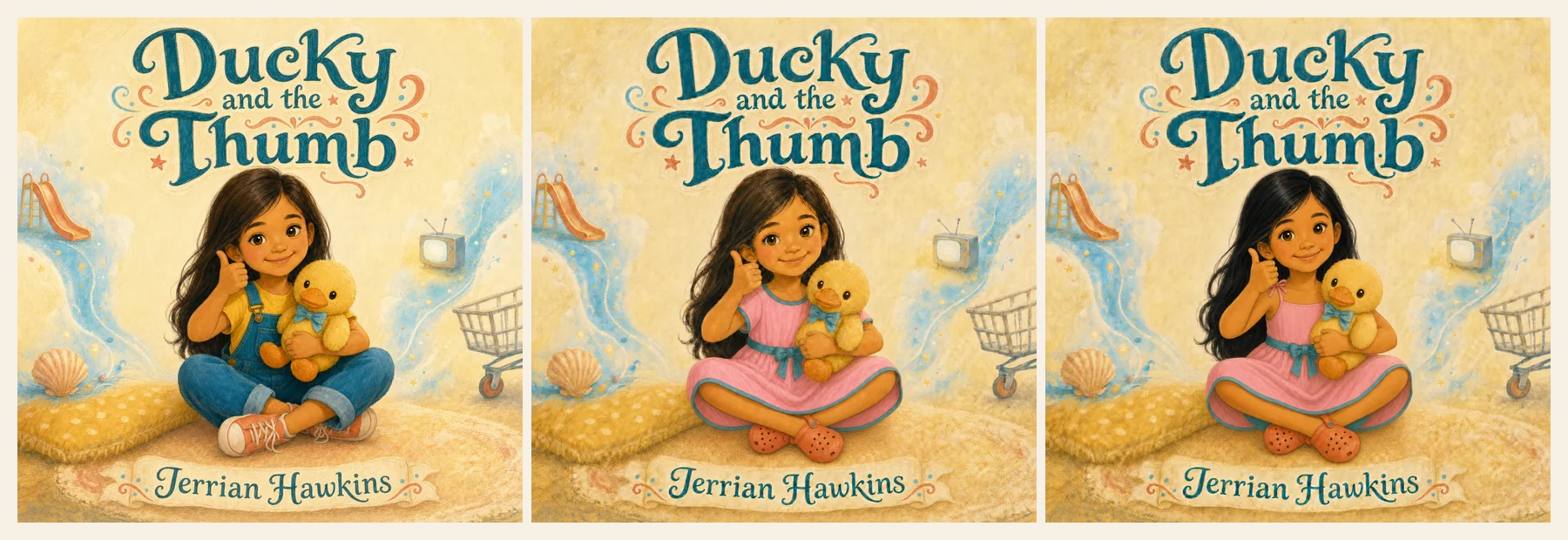
How artist-directed AI-assisted continuity works
AI generation by itself does not keep a character consistent. In an artist-directed AI-assisted workflow, the human work is to define and approve the rules, maintain references, select usable material, compare each scene, reject drift, and correct, recompose, or retouch what does not fit. Approval checkpoints keep a weak direction from being multiplied across the book.
MyBookIllustrator’s standard package uses an openly disclosed artist-directed AI or AI-assisted process. Traditional or completely non-AI illustration is separately quoted. The written scope should identify the workflow, delivered files, and practical publishing permission without promising rights that may not legally exist in every element or jurisdiction. The fillable illustrator brief gives you a place to record the character rules, process choice, and approval responsibilities.
10-point character-continuity checklist
Run this check on the cover, every interior appearance, and the final book in sequence.
- SilhouetteIs the character recognizable at a glance?
- ProportionsAre head, body, limbs, and height relationships stable?
- FaceAre feature shapes and placements consistent?
- ColorDo skin, fur, clothing, and markings follow the approved palette?
- WardrobeAre buttons, pockets, patterns, shoes, and intentional changes correct?
- PropsIs each recurring object present, sized correctly, and in the right hand or place?
- ViewDoes the design still work from the required angle?
- ExpressionIs the emotion clear without changing the character’s identity?
- SequenceDo changes occur only after the story causes them?
- Print viewDoes the character remain clear at final trim size and across the gutter?
Quick answers
Should a character look identical on every page?
No. Identity should stay stable while pose, expression, scale, lighting, and viewpoint change with the story. Perfect repetition can feel as unnatural as uncontrolled drift.
How many characters need sheets?
Create a working reference for every recurring character whose appearance must be recognized later. Minor background figures may only need a short note if they do not recur.
What should an author send before a sample?
Send the final manuscript, intended reader, character notes or references, and the scene that best tests the character. Note which details are required and which are flexible.