Children and family
Guide the character’s face, hair, favorite outfit, glasses, wheelchair, freckles, or another defining detail—with permission from the pictured person or a child’s parent or guardian.
Optional personalization · Photo-referenced story art
You do not need any photos to make a complete picture book. When recognizable personal details matter to your story, photos you already have can guide a child, beloved pet, family home, favorite place, toy, or keepsake through a coordinated children’s-book world. Toby develops the visual rules, keeps important details consistent, and finishes the cover, interior, revisions, and publishing files with you.
Photos are optional. A final, proofread manuscript is required before standard-package production begins; an idea, outline, draft, or reference photo is enough to discuss fit and request a free sample direction.
Only when it helps your story
This is an optional personalization path, not a requirement. When you choose it, the strongest references are not always professional portraits—a clear phone photo can preserve the details that make a person, animal, place, or object feel unmistakably yours.
Guide the character’s face, hair, favorite outfit, glasses, wheelchair, freckles, or another defining detail—with permission from the pictured person or a child’s parent or guardian.
Turn a dog, cat, horse, bird, rabbit, or other companion into a recurring hero while preserving markings, ear shape, collar, body type, and familiar expressions.
Make the real porch, roofline, windows, garden, bedroom, neighborhood, family shop, farm, or vacation place part of the adventure.
A favorite stuffed animal, blanket, handmade doll, little red wagon, or well-loved toy can become the companion or magical object at the heart of the story.
Recipes, jewelry, quilts, tools, letters, ornaments, and family treasures can carry a memory or tradition into the next generation.
Use a child’s monster, spaceship, imaginary friend, map, or invented world as visual inspiration, then develop it into a coordinated storybook direction.
From reference to story
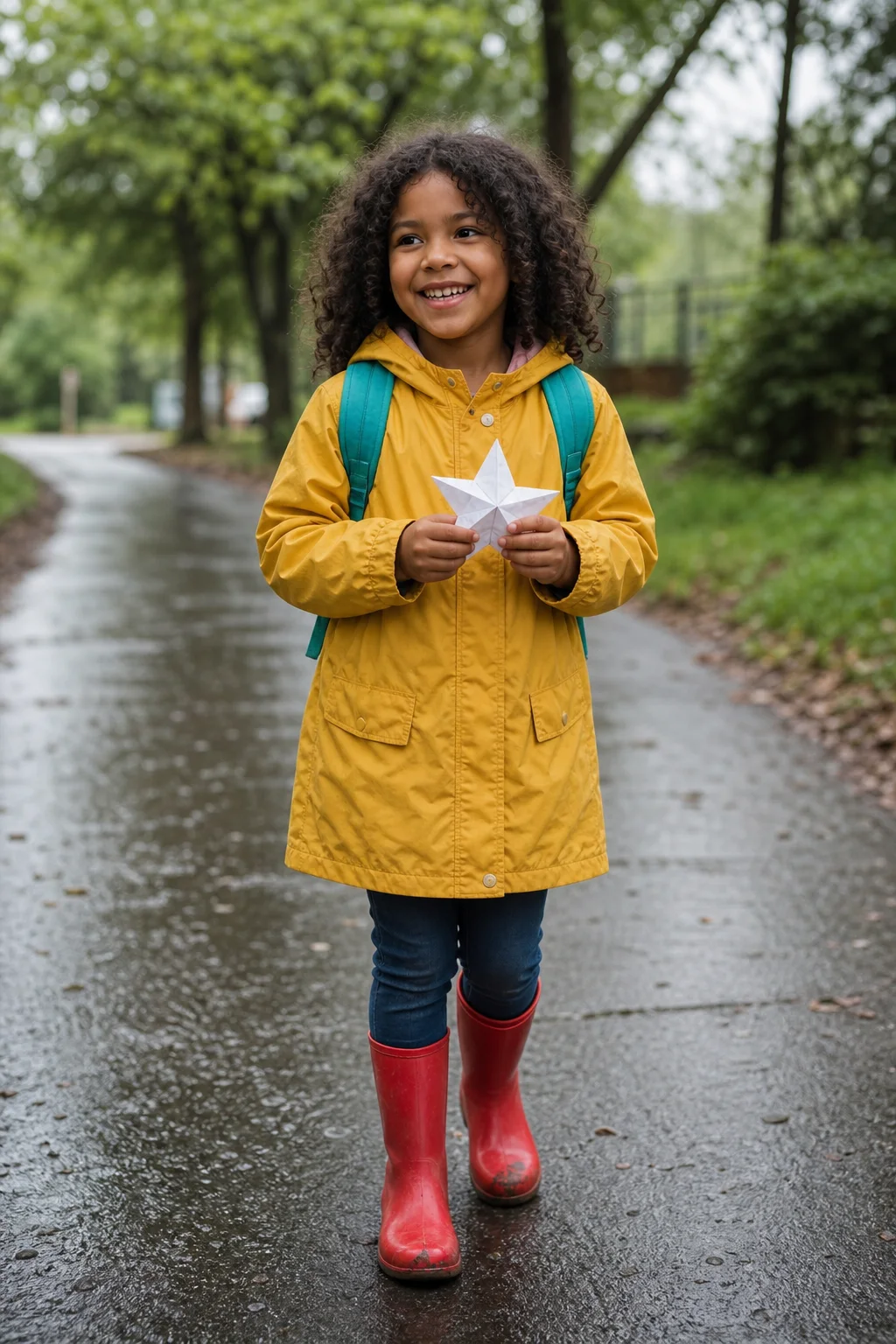
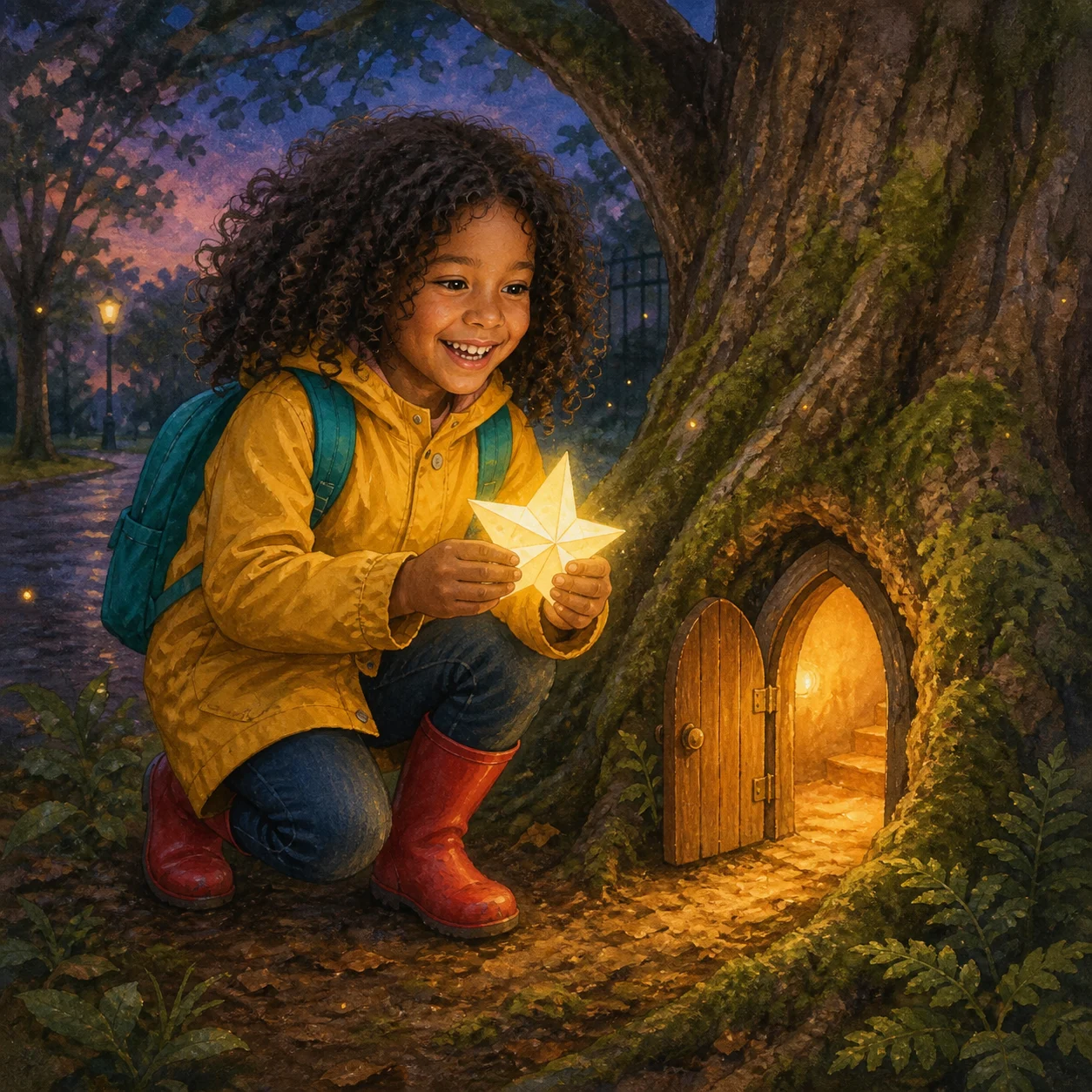
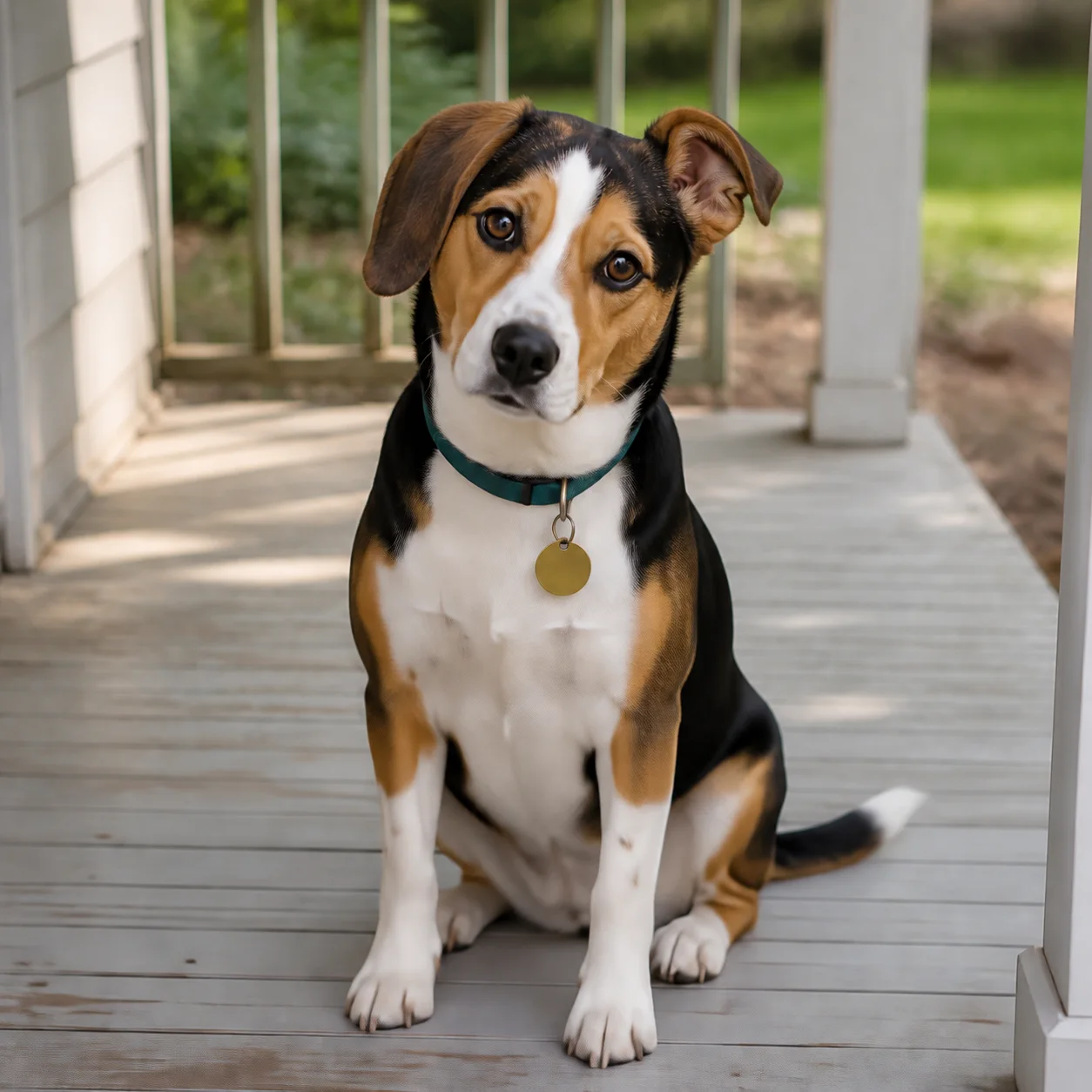
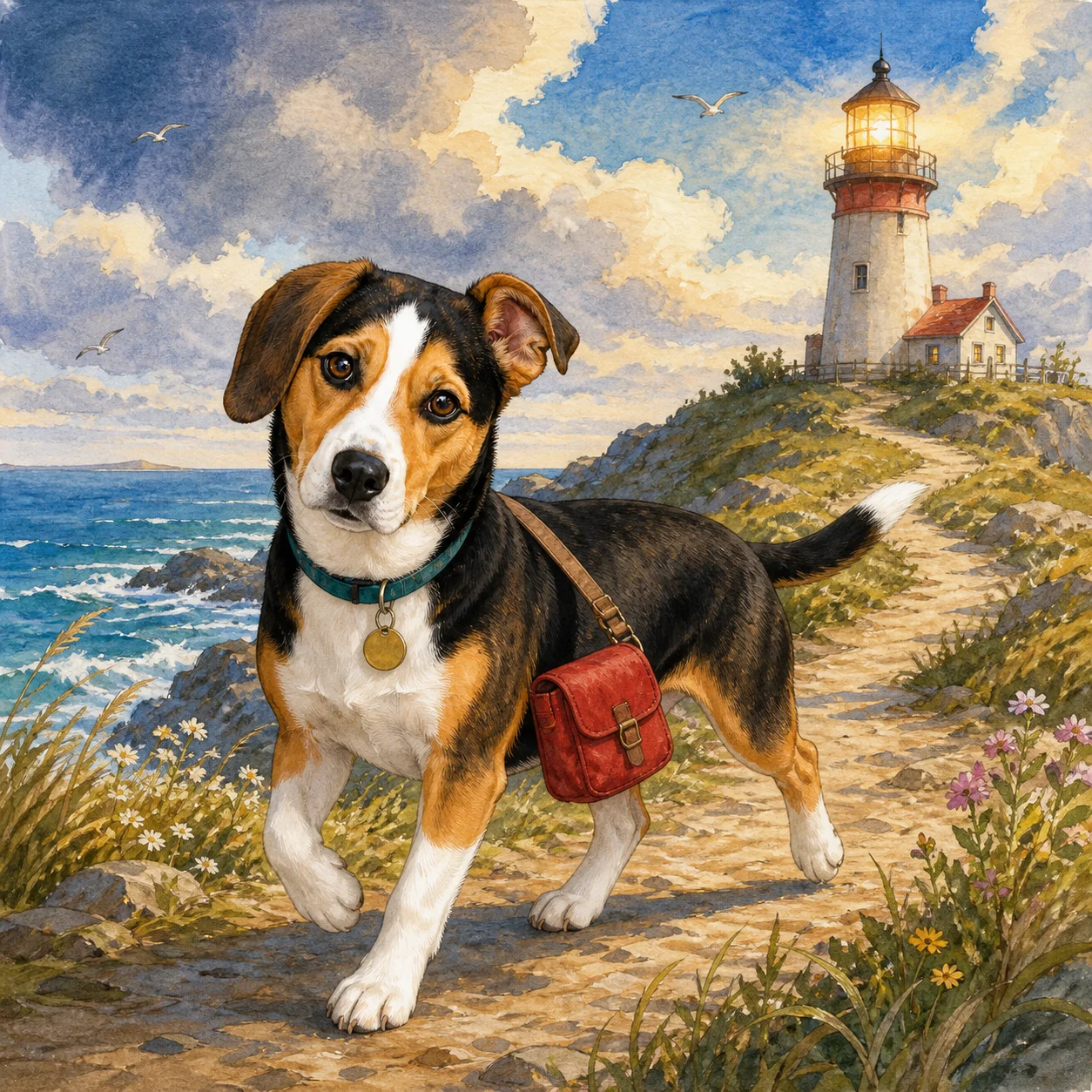
Each pair shows how recognizable visual clues can move from a source image into a completely new story scene.
A child becomes the explorer
The raincoat, backpack, boots, hair, face, and paper star carry into a magical forest scene. The result feels connected to the reference without simply tracing or copying the photograph.
A pet becomes the hero
The dog’s black saddle, tan face, white chest, forehead blaze, mismatched ears, teal collar, and brass tag remain recognizable while the setting becomes a windswept lighthouse adventure.
A house becomes the setting
The roofline, porch, pale-blue siding, brick chimney, windows, front door, and garden remain identifiable while blue-hour light and a welcoming glow turn the home into the beginning of an adventure.

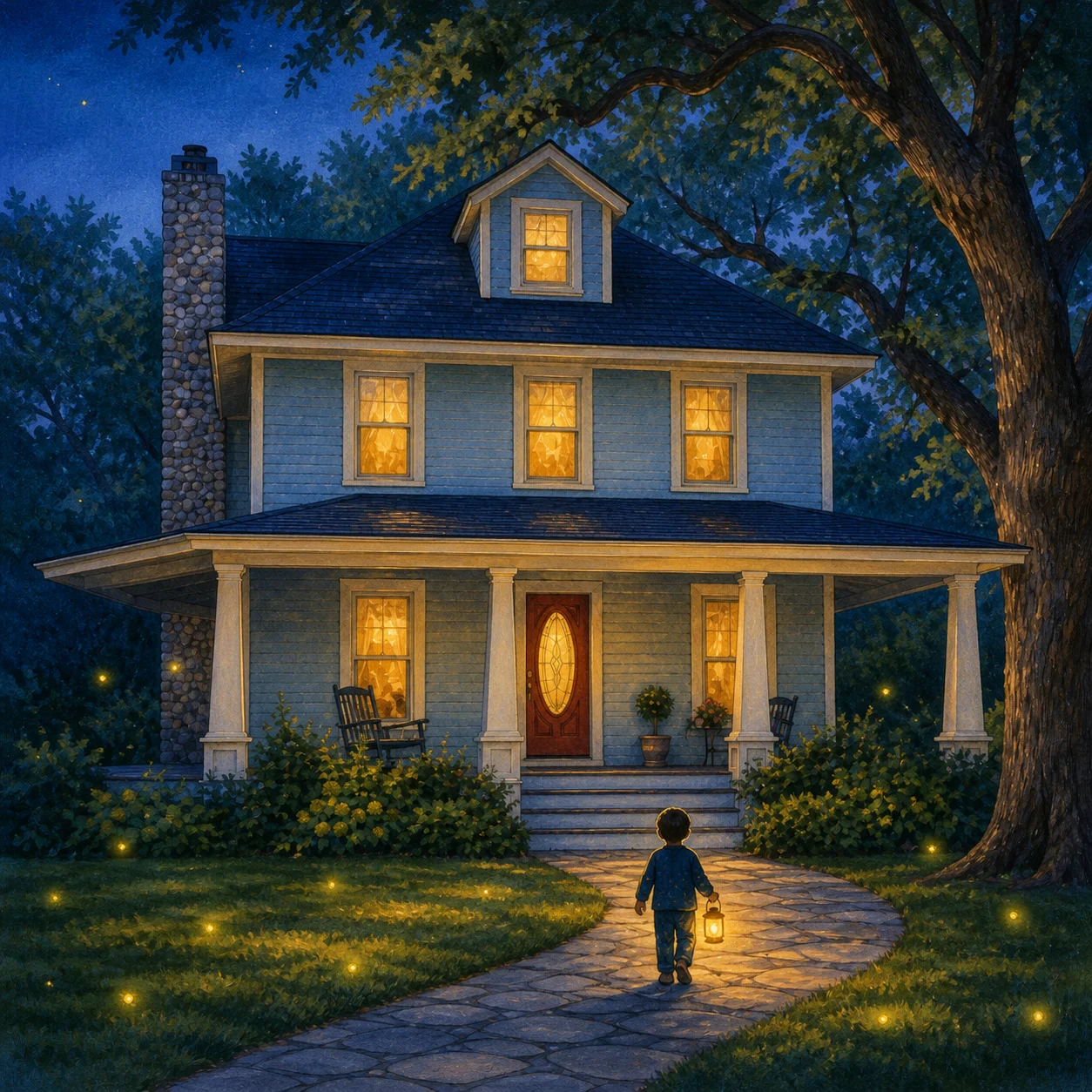
About these demonstrations: the source photos, child, dog, and house are intentionally fictional AI-generated examples—not clients, documentary photos, or real properties. They were created to demonstrate the process without using anyone’s private family material.
A controlled process
Toby does not simply drop a photograph onto the page. He identifies the details that matter, develops one approved illustration direction, and checks those rules scene by scene.
Send copies or private links to photos you own or have permission to use, plus a note explaining what must stay recognizable.
Confirm the important face, markings, clothing, architecture, objects, colors, relationships, and story mood.
Review one coordinated storybook direction before the complete book is developed around it.
Toby directs, selects, edits, lays out, revises, and checks recurring details through the final cover and interior.
Permission and privacy
You must own or have permission to use every submitted photo, name, likeness, logo, and other reference. For a child, obtain permission from the parent or legal guardian. Do not send private account credentials or sensitive personal information.
Reference photos are used to discuss and produce your project. They are not displayed publicly as portfolio material without separate permission. When possible, remove location metadata before sharing family photos. An exact photographic likeness is not promised unless it is specifically agreed in writing.
Read the privacy notice →Practical questions
No. Toby can create the complete cover and interior from your final manuscript, ideas, character descriptions, and approved visual direction. Photo-referenced art is simply an optional way to include recognizable personal details.
Yes. A clear face view, full-body view, favorite outfit, and a few expressions can help define a stronger recurring character. Explain which photo is most accurate when details conflict.
Yes, when the recurring-character and setting plan fits the agreed scope. The most important markings or architectural details are established before the full book is built.
Photo-guided characters and settings can be included in the standard $200 package when the manuscript, reference set, page plan, and illustration complexity fit the agreed scope. An unusually large cast, many separate locations, extensive likeness work, or an unusually art-intensive plan may require a separate quote.
If a real reference belongs in the story
Photos are optional, and no payment is required to request a free sample direction.